A Midwinter Window for Watching the Light Change
A midwinter window practice helps you notice subtle changes in daylight, with a comfortable seat, a familiar view and a few quiet minutes indoors.
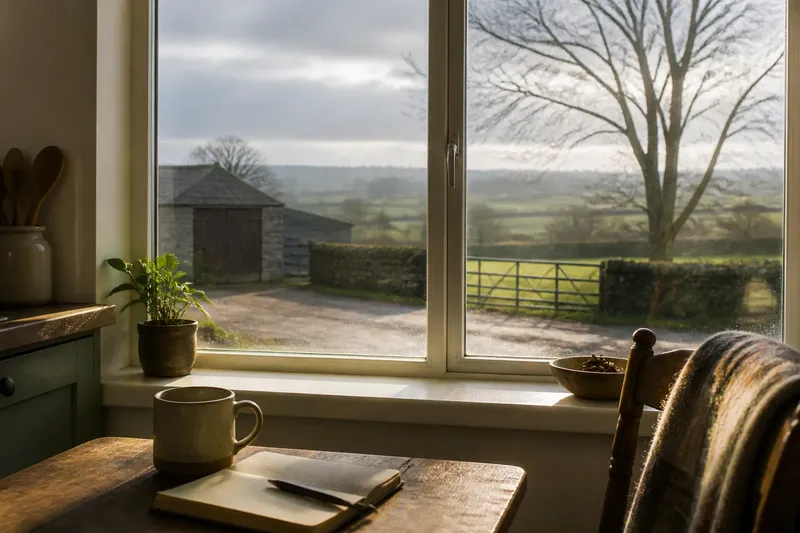
At the kitchen table, a pale strip of daylight rests on the sill while the hedge beyond the glass is still dark. A midwinter window practice makes this small shift easier to notice: choose a comfortable place, watch one familiar view and return to it over several visits.
This is not a weather log or a test of patience. It is a way to give the season some attention without needing to go outdoors, change your plans or find a picturesque view. The same window can reveal how cloud, passing weather and daylight alter what you notice.
Choose a steady view
Pick a window you can reach easily and a seat that feels comfortable for a few minutes. A kitchen chair, the end of a sofa or a cushioned bench can work; choose somewhere you can settle without rearranging the room.
Look for a few clear reference points: a gate, a tree trunk, a roofline, a field edge or the rim of a water trough. These give your eyes something stable to return to as the light changes. A broad view is not essential; even a patch of wall can show the boundary between light and shade.
Notice practical details that might interrupt you. If the window is draughty, sit slightly back; if glare makes you squint, angle your chair or close a sheer curtain. Comfort matters more than a perfect vantage point.
Make brief visits
Choose a part of the day that fits your routine, such as after breakfast or before making an afternoon drink. Revisit the window at roughly that time on several days. Stay briefly, then stop when your attention wanders or another task calls.
On your first visit, take in the whole scene without trying to name every detail. Notice whether the light feels cool or warm, flat or slanting, bright at the edges or softened by cloud. Nearby objects may look distinct or blend into one another.
On later visits, follow one feature at a time. Watch where a patch of brightness falls, whether the hedge separates from the field, or how a roof changes against the sky. Then let your gaze widen again. Moving between a detail and the whole view keeps the practice simple.
Say you choose the farmyard view from a kitchen window. On the first afternoon, the shed door and a bare apple tree look like dark shapes beneath a grey sky. On another, a break in the cloud picks out the branches and pale gravel; the observable change is which details stand out, not that one day is better.
Notice light and weather
Cloud, rain, fog and clear intervals can change how much contrast you see. A passing cloud may soften shadows, while a brighter interval can make a distant wall or field edge stand out. In mist or rain, nearer objects may become more prominent.
There is no need to infer a forecast from the view. Describe this moment instead: the brightness at the window, the clarity of the distance or the colour of the ground. It is like turning a familiar mug in your hands: its appearance shifts with the light, though the mug itself has not changed.
If you want a small record, write one plain sentence after a visit. “The fence posts were clearer than the far hedge” captures a specific observation without trying to record everything. A notebook or the back of an envelope is enough, and writing is optional.
When plans change?
What if the sky stays grey?
Look for differences in brightness rather than direct sun: a pale cloud edge, a reflective puddle or a tree that becomes easier to distinguish from its background. Overcast light can make these quieter changes easier to notice because hard shadows are absent.
What if I miss a day?
Return when it suits you and continue with the same view. The week is a gentle span for noticing, not a schedule to complete; there is no need to make up a missed visit.
Should I watch at the same time?
Keeping to a similar part of the day makes visits easier to compare, but it is not essential. If your routine changes, note that both the weather and the time may affect what you see.
What if I cannot see outdoors clearly?
Choose the nearest visible detail, such as moisture on the glass, the frame against the sky or a patch of light on an inside wall. You can also adjust your position or use a familiar view within the room.
Fit the practice in
Some days you may stay for only a breath or two; on others, the pause may lengthen naturally. You can pair it with an indoor habit, but the practice need not depend on finishing a task first. The window is there when you have a moment.
When the week ends, recall one change that caught your attention, or look back at any notes. Perhaps the near branches stood out on a bright day, or the field seemed to fade into mist. A midwinter window practice offers a modest way to meet the season where you are: indoors, with an ordinary view and enough time to notice that light is never quite still.