Dawn or Dusk: Choosing a Time for a Quiet Outdoor Pause
Choosing dawn or dusk for a quiet outdoor pause? Compare light, sound and daily demands to find an outdoor moment that feels comfortable and easy to repeat.
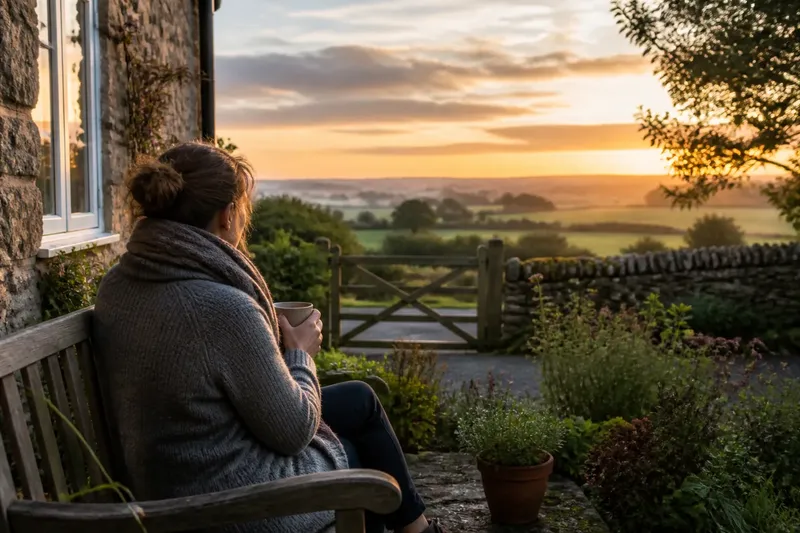
The kettle is on, but the lane outside is still dim; later, the same patch of sky may glow as the day closes. Choosing dawn or dusk for a quiet outdoor pause starts with noticing which transition is easier to meet. You need only a safe, familiar spot and a little attention to the changing light.
Fit the time
Consider the shape of your actual day rather than an ideal version of it. Dawn may suit you if you are already awake before household tasks begin; dusk may fit after work, when you can step outside without rushing into another obligation.
Think about what tends to interrupt each window. A morning pause may compete with getting children ready, feeding animals or catching transport; an evening one may be squeezed by cooking, visitors or the wish to settle indoors. Choose a moment that has a chance of feeling like a pause, not another appointment.
Pick a place close enough that reaching it does not become the main event: a doorstep, garden gate, bench beside the house or sheltered stretch of yard. Near a road, working farm or shared path, stay somewhere you can remain aware of people and vehicles.
Read the light
Early light often arrives gradually. Shapes emerge from shadow, colours may seem muted, and small changes—mist lifting above a field or a hedge becoming distinct—can hold attention without much effort. A warm layer can help if the air feels cool while you stand still.
At dusk, light recedes rather than appears. The sky may retain colour while familiar details darken, and a field that looked open in the afternoon can become harder to read. This may feel settling if you enjoy the day winding down, but less comfortable if you prefer clear sightlines.
Think of dawn and dusk as two pages in the same notebook: one leaves space for what is beginning, while the other lets the day’s marks grow quieter. It is only an analogy, not a rule; cloud, season and local activity can make either time feel lively, subdued or unsettled.
Notice whether the light helps you feel alert, restful or simply present. Rather than expecting a particular display, let the conditions of the day inform where you stand and how long you stay.
Hear the surroundings
Sound can guide your choice as much as colour. At dawn, you may hear birds calling, a gate opening, a distant engine or movement around nearby homes and fields. At dusk, birds may quieten while people return, dogs bark, traffic shifts or farm work continues.
These are possibilities, not a fixed countryside soundtrack. A village beside a busy road may be loud in the morning, while a sheltered garden can remain calm at evening. Listen for the pattern in your own spot rather than assuming one hour is naturally more peaceful.
Notice whether sound draws your attention outward or makes you feel on edge. If machinery, livestock or people use a nearby route, stay where you can see what is happening and keep the pause flexible. Quiet does not require ignoring the place around you.
Choose a position
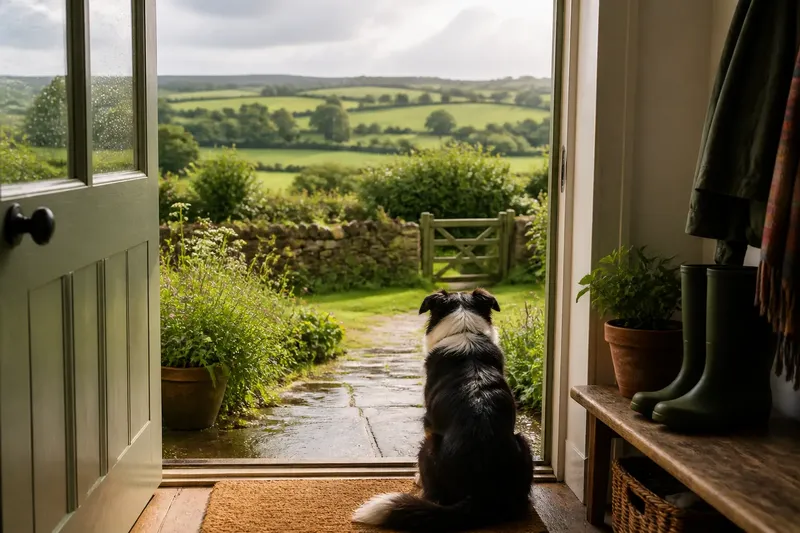
A sheltered doorway can soften wind; a garden seat may offer a view of trees or open sky; a gate can provide a clear view while keeping you out of the way. In damp weather, a step or paving stone may be more comfortable than wet grass.
Before settling in, check whether the ground is firm, whether you can see your route back and whether a porch light or nearby window will help as evening darkens. Dress for standing still, not just for walking from the house: a coat, scarf or gloves can make the pause more comfortable.
Keep a torch within reach at dusk if you may need it to return, and use it with care around other people and animals. If the spot feels exposed or the route becomes hard to see, move closer to the house or choose a brighter time.
Keep the pause simple
When the time arrives, leave your phone in your pocket or set it to silent if you do not need it for safety. Let your eyes adjust, then choose one thing to notice: the edge of a cloud, the shape of a tree, the direction of the breeze or a change in birdsong.
There is no need to force stillness or empty your mind. If thoughts keep moving, let them move while you attend to one visible or audible detail. If you are cold, distracted or uncomfortable, change position or go inside; a useful pause does not need to be endured.
Say you have a school run in the morning and a quieter stretch after supper. On a day when the morning is not rushed, stand by the back door and notice whether the early light feels comfortable; on another day, sit on a sheltered garden bench at dusk and see whether the fading detail feels restful. If dawn feels bracing and dusk feels settled, favour the evening when your schedule allows; if both feel unsettled, try a doorway with a clearer view and remain close to home.
Which time suits you?
Is dawn better for a quiet pause?
Dawn may suit you if you welcome a gentle start and can step outside without competing demands. If waking early leaves you tired or the morning is already full, try another time rather than adding pressure to the day.
Is dusk a good time to sit outdoors?
Dusk can mark a natural pause after the day, especially if you have shelter and can see your way back. If fading light makes the spot uncomfortable, move nearer to the house or choose a brighter part of the evening.
How long should an outdoor pause last?
Stay only as long as you can remain comfortable and attentive. A short pause can be enough to notice a change in light or sound; extend it only when your schedule and the setting make that feel easy.
What if neither time feels peaceful?
Neither dawn nor dusk has to be the right answer: discomfort may come from the location, the weather or the expectation of being still. Try a sheltered doorway, warmer clothing or a different part of the season, and choose another time of day if those changes still leave you uneasy.
Let conditions guide you
After a pause, remember what mattered: perhaps dawn gave you a clearer head, or dusk offered a welcome boundary between work and home. A brief note on your phone or a quiet recollection can help guide your next choice without turning the pause into a task.
- Check whether the path is visible; if you can see your way back, use the spot, but if not, move closer to the house or choose a brighter time.
- Check whether the ground feels firm underfoot; if it does, stay where you are, but if it is slippery or muddy, move to a step or paved area.
- Check whether the wind reaches your seat; if the spot feels sheltered, remain there, but if you are getting cold, move behind a wall or doorway.
- Check whether nearby traffic, machinery or livestock needs attention; if you can keep it in view, pause at a safe distance, but if not, choose a more suitable place.
- Check whether fading light still lets you recognise familiar details; if it does, stay as long as you are comfortable, but if it does not, use a torch carefully or head indoors.
- Check whether household tasks are pressing; if you can step out without rushing, take the pause, but if not, look from a window or choose another time.
Choosing dawn or dusk for a quiet outdoor pause is a personal decision shaped by light, sound, comfort and the day’s demands. Let those practical details guide the choice; the clearest sign of a good fit may be that stepping outside feels easy to do again.