The Myth of the Perfect Countryside Routine
A countryside routine need not follow a picturesque schedule. Learn how to choose small outdoor habits that fit your work, energy and home life.
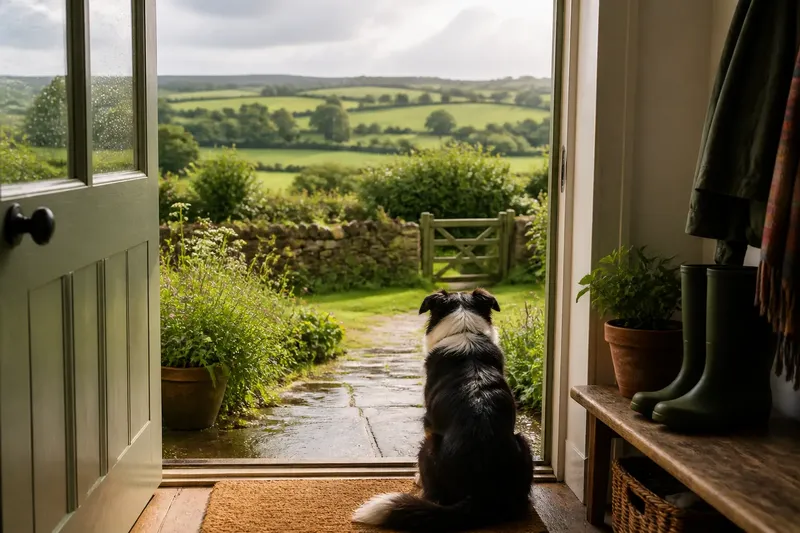
The kettle clicks off while rain taps the kitchen window, and the dog is still waiting by the door. A countryside routine can begin with that ordinary pause, not with a sunrise walk or a carefully staged hour outdoors. The useful question is not what a perfect routine looks like, but which small repeated moments fit the life you actually have.
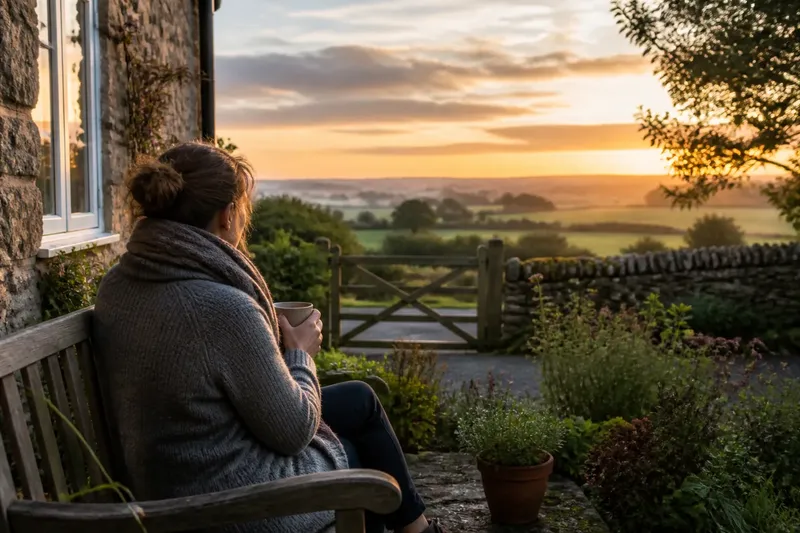
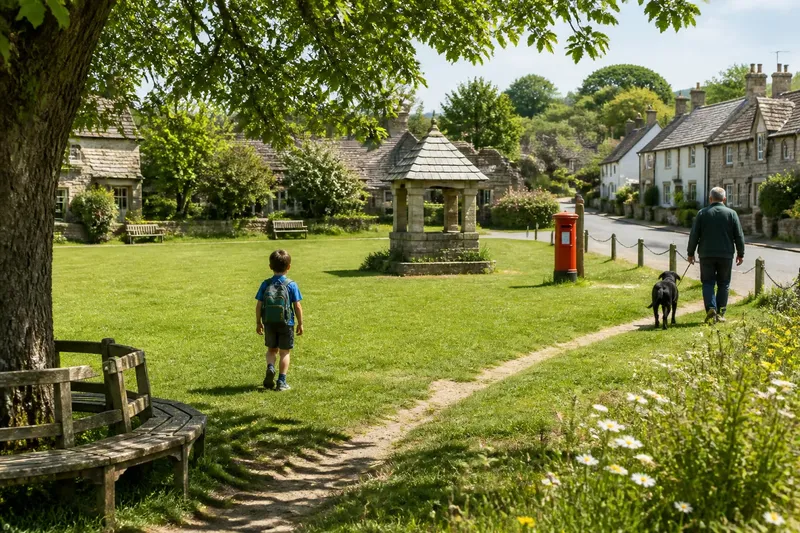
Ideas about rural wellbeing often come wrapped in a tidy picture: a walk before breakfast, a garden tended at the same time each day, a quiet evening outside. Those habits can be lovely, but they are not a measure of whether someone is connected to the landscape. Work shifts, caring responsibilities, weather, mobility and energy all shape what is possible.
Routine without the picture
A routine is simply an action that returns often enough to become familiar. It does not have to happen at a fixed hour, last for a set duration or involve a scenic destination. A repeated glance at the clouds while hanging washing can be a real point of contact with the day.
The distinction matters because picturesque ideals can turn a source of pleasure into another obligation. If a missed morning walk makes you feel that the day has gone wrong, the routine may be too rigid for the circumstances it is meant to support. A useful habit should be able to bend without becoming meaningless.
Think of it like a coat hook by the door: its purpose is to make one everyday action easier, not to impose a particular style of coat. A routine can serve as a small point of return, while leaving room for the rest of life to vary.
Three workable approaches
Anchor a moment
An anchored routine attaches an outdoor moment to something that already happens. You might step onto the threshold after feeding a cat, look at the hedgerow while waiting for a bus, or open a window before beginning desk work. The existing event acts as a cue, so the habit does not need a new place in a crowded calendar.
This approach often suits people whose days have dependable transitions but little spare time. It can also help when leaving home is difficult: a view from a doorway, balcony or window still offers changing light, birdsong or weather to notice. Keep the action modest enough that it remains possible on an ordinary day.
Follow a flexible window
A flexible-window routine names a broad part of the day rather than an exact time. For instance, you might spend a little time outside whenever a work break, school run or household task leaves a gap. The moment may move, but the intention remains recognisable.
This can suit people whose hours shift or whose plans depend on weather and family needs. It also works well for gardening, checking a bird feeder or taking a short route around the yard, because the activity can be fitted to the conditions. The trade-off is that a window can keep being postponed; a gentle cue, such as leaving boots near the back door, can make it easier to act when the gap appears.
Keep an open invitation
An open-invitation routine has no daily promise attached. Instead, you keep a few accessible choices ready: sit on the step, walk to the end of the lane, tend a pot of herbs, or pause near a familiar tree. You choose one when it feels welcome and let it go when it does not.
This approach may suit people with unpredictable energy, variable health or caring duties that can interrupt plans. It can also be useful during seasons when daylight and weather make a fixed habit awkward. Its limitation is that an invitation can fade from attention, so a visible reminder—a pair of wellies, a garden trowel or a chair near the door—may help.
Choose by fit, not ideal
To choose among these approaches, look at the shape of a usual week rather than an imagined best day. Ask when you already cross a threshold, when an unhurried gap is most likely, and whether you prefer a cue or the freedom to decide in the moment. These questions point towards a routine that can live alongside your existing responsibilities.
Imagine a person who works changing shifts and cares for a parent. A daily walk before breakfast would often conflict with sleep or appointments, so they choose an open invitation: when a visit ends early, they sit by the garden gate and notice what is flowering. The observable result is a familiar outdoor pause on days when it fits, without turning missed opportunities into a debt to repay.
Use practical constraints as design information, not as evidence of failure. If the nearest pleasant path is difficult to reach, an outdoor habit can happen on a doorstep or beside a window. If cold hands make lingering unpleasant, a brief look outside from a sheltered spot may suit better than a long stay.
- Check your dependable cues. If a task happens most days, consider attaching an outdoor moment to it.
- Check how predictable your schedule is. If it changes often, choose a flexible window or open invitation rather than an exact hour.
- Check what your body and energy allow. Choose a form of contact that feels manageable, and adjust it as your needs change.
- Check the nearest comfortable place. A step, sheltered bench, garden edge or clear view from indoors may be more usable than a distant route.
- Check what you genuinely enjoy noticing. If you like birds, make room for listening; if you prefer practical tasks, tend a pot or collect fallen leaves.
- Check what happens when a day goes differently. If a missed moment creates guilt, loosen the timing or remove the daily promise.
Questions about routine?
Does a countryside routine need to happen every day?
No. Repetition can create familiarity, but the useful rhythm might be tied to certain workdays, a weekly errand or changing weather. Choose a pattern that remains meaningful without making every exception feel like a failure.
Can an indoor moment count?
Yes. Watching rain move across a field, opening a window to hear birds or tending a plant near a bright window can keep attention connected to the outdoors. The point is the attentive, repeated moment, not proving that you have been outside.
What if the routine becomes a chore?
Notice whether the timing, duration or activity has stopped fitting. You might shorten it, move it to a different cue or replace it with another small action; a routine is allowed to change when the life around it changes.
How do seasons affect a routine?
They change what is comfortable and available: a garden task may suit one part of the year, while a sheltered view or brief doorstep pause suits another. Keep the underlying intention—such as noticing the weather or tending something living—and let its form respond to the season.
Let the habit change
A routine does not need to stay identical to remain familiar. The same person might use a flexible window during a busy spell, then return to a regular garden task when work eases. Treating the form as adjustable preserves the useful part: a small moment that belongs to the life being lived now.
The myth of the perfect countryside routine makes ordinary variation look like a flaw. A better countryside routine is one you can recognise as yours: modest, adaptable and connected to a place or detail you care to notice. Keep the cue that helps, change the part that presses, and let the landscape meet you where you are.